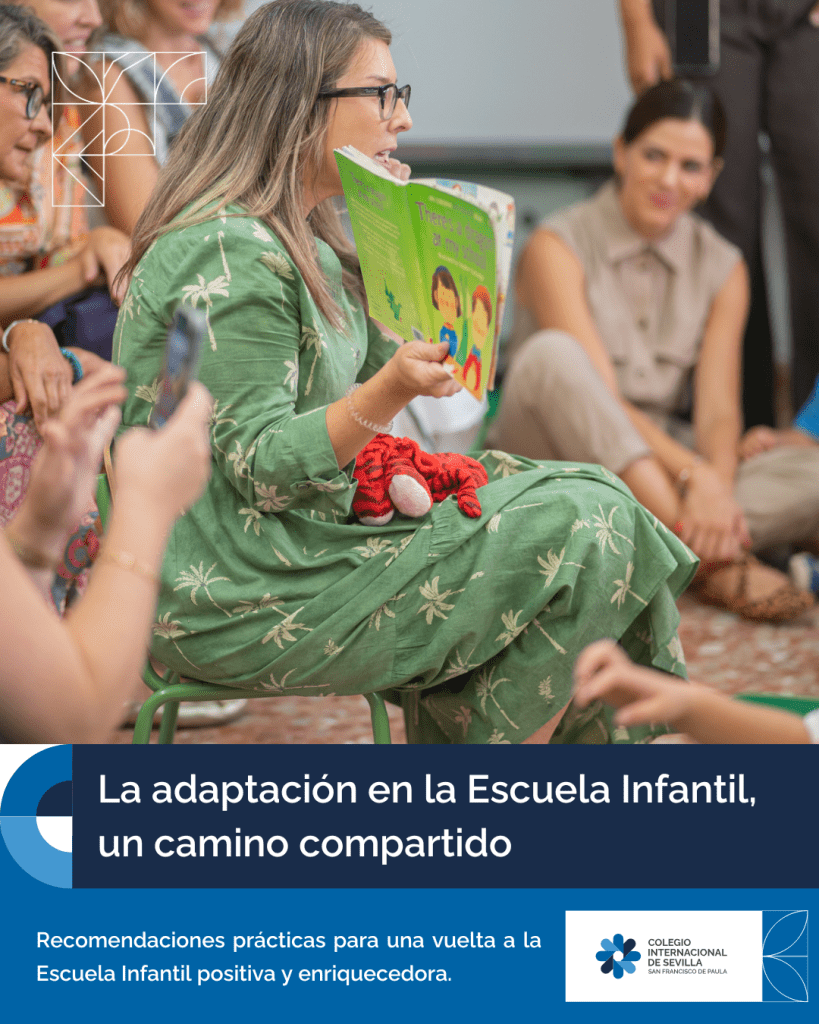
Adapting to PreSchool: a shared journey
The start of a new school year is always a special time, full of excitement but also uncertainty. The first few days at Pre-School can be nerve-wracking for both children and their families. To help you face this stage with calm and confidence, our Pre-School Head, Ms Ana Vivancos, offers a series of practical guidelines to support families in accompanying their children through this adaptation process.
Practical recommendations for returning to Pre-School
Gradually return to normal schedules
During the summer, it is normal for routines to become more relaxed. Therefore, a few days before the start of the school year, it is a good idea to gradually adjust sleep and meal times.Bringing bedtime forward and organising meals according to the school timetable allows pupils to arrive at school rested and energetic, which helps them adapt more smoothly from the outset.
Involve children in choosing their supplies
Letting young children participate in choosing their backpack, pencil case or water bottle gives them a sense of ownership and makes them feel part of the process.Sticking on labels with their name, choosing colours together or decorating it with stickers turns this task into a fun activity that arouses excitement.
Show enthusiasm when talking about school
Children absorb our mood. Talking happily about school, classmates and teachers helps to convey confidence.Looking at photos from the previous school year together or walking the daily route to school together allows them to familiarise themselves with the environment, which reduces uncertainty and makes the return to school a more peaceful experience.
Have their clothes ready
Avoiding rushing around on the first few days makes all the difference. Choosing and preparing uniforms or clothes the day before helps them start the day calmly.In addition, giving your child the opportunity to choose their outfit (if possible) encourages their independence and helps to create an enjoyable and participatory routine.
Plan a special activity for the first day
Turning the first day of school into a small event can make all the difference. A family snack, a visit to the park or reading a story together when you get home are gestures that help to associate the experience with affection and enjoyment, reinforcing the positive memory of that moment.
Accompany and validate their emotions
Nerves can manifest themselves in many ways: crying, shyness, mood swings... The most important thing is to listen and attend to what they feelto listen and pay attention to what they are feeling, with phrases such as: ‘I can see that you are a little nervous, and that is completely normal; at school you will be accompanied and you will learn new things.’ Validating their emotions and responding calmly helps them feel understood and secure.
Ultimately, the attitude of families is a determining factor in this adaptation process. Conveying serenity, confidence and enthusiasm towards the school and the school experience contributes decisively to helping the little ones face this new stage with confidence and excitement.
Happy start to the school year!